Angkor Wat is one of those rare places where even familiar photographs still feel impressive. The temple’s towers reflected in the quiet water at sunrise have become one of the most recognizable images in Southeast Asia, yet the real experience goes far beyond that single view.
The Angkor Archaeological Park is filled with opportunities for photographers. Ancient stone corridors, jungle-covered ruins, detailed carvings, and changing tropical light create endless possibilities for capturing something different from the images seen online.
A successful photography trip to Angkor requires more than bringing the right camera and lenses. The best light often appears for only a short time, many temples are spread across a large area, and small travel problems can quickly affect a carefully planned day. Alongside spare batteries and memory cards, many visitors now prepare practical digital tools such as eSIMs and virtual phone numbers before arriving in Cambodia.
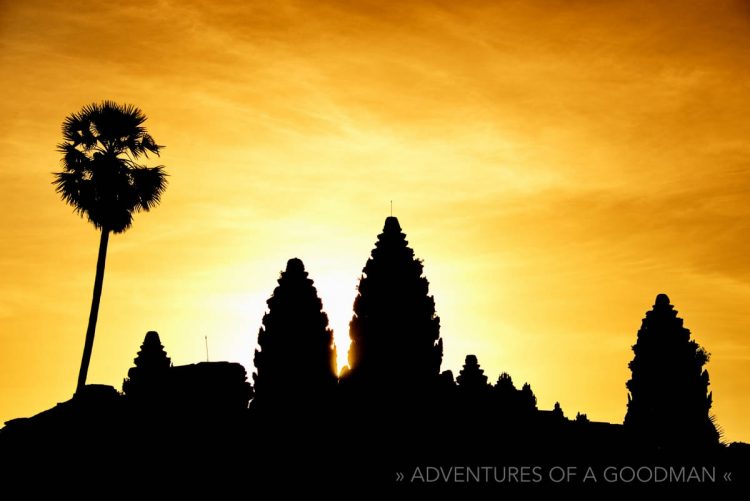
The classic view of Angkor Wat and the reflecting lotus pond.Angkor Wat at Sunrise
Planning a Sunrise Photography Trip to Angkor Wat
For many photographers, the day begins before sunrise. By around 5 a.m., tuk-tuks are already making their way toward the main entrance as visitors walk through the darkness hoping to capture the famous reflection pools in front of Angkor Wat.
The scene changes quickly. A calm morning with clear skies can create a perfect reflection of the temple towers, while clouds can completely transform the mood of the photograph. The difference between an ordinary image and a memorable one often comes down to timing, patience, and preparation.
Many travel arrangements are handled online before arriving in Cambodia. Accommodation, temple passes, transportation, and tours are usually booked in advance. Alongside setting up an eSIM for mobile data, some travelers choose a phone number for verification to access travel accounts, receive security codes, and manage reservations while moving between countries. This can be useful during longer journeys where several booking platforms and services need to remain accessible.
Planning also means deciding how to divide time across the park. Angkor Wat may be the most famous temple, but some of the most rewarding photographs are found away from the busiest viewpoints.
Why eSIMs Are Useful for Exploring Angkor
The size of the Angkor Archaeological Park surprises many first-time visitors. The temples are not located next to each other, and moving between them often requires transportation, route planning, and some flexibility.
A mobile connection becomes particularly valuable when exploring the area independently. A photographer might leave the hotel before sunrise, arrange a tuk-tuk ride in the dark, check a weather forecast before heading to another temple, or use a map to find a less crowded location. Small decisions like these are much easier when internet access is available.
Landing in Siem Reap with a full photography schedule also leaves little time for practical errands. Searching for a SIM card shop, comparing local plans, and getting everything activated is not how most visitors want to spend their first hours in Cambodia. An eSIM allows travelers to arrange mobile access before arriving, so maps, messages, and travel apps are ready when they are needed.
This is especially helpful for photographers because conditions at Angkor can change throughout the day. A cloudy morning does not always mean a wasted shoot. Softer light can create better portraits of stone carvings, and sudden changes in weather can transform familiar temples into completely different scenes.
A reliable connection is not about spending more time on a phone. It is about removing small obstacles that can interrupt a day of exploring, especially when every hour of good light matters.
Trying to leave Angkor Wat at the end of the day is like being stuck in a human traffic jam.
Beyond the Famous Angkor Wat Sunrise
The sunrise view at Angkor Wat deserves its reputation, but the wider temple complex offers far more variety for photographers.
Bayon Temple and the Faces of Angkor Thom
Inside Angkor Thom stands Bayon, a temple unlike any other in the region. Its massive stone faces look out from dozens of towers, creating a scene that feels both mysterious and timeless.
The best photographs here often come from slowing down. Instead of searching only for wide shots, photographers can focus on smaller details: the expression carved into a face, the texture of weathered stone, or the way sunlight moves across the temple walls.
Early morning is often the best time to visit. The softer light creates stronger shadows, and arriving before the largest crowds gives photographers more space to explore.
A face in the jungle – the ruins of Bayon in Angkor, Cambodia
Ta Prohm and the Power of Nature
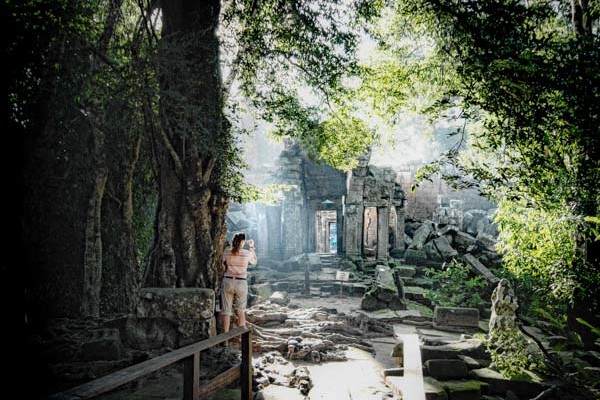
Ta Prohm is perhaps the most dramatic example of nature and architecture existing together at Angkor. Huge tree roots stretch across ancient walls, wrapping around doorways and stone structures.
The temple creates a different challenge for photographers. The scale of the trees can be difficult to capture, while the details hidden throughout the ruins reward a closer look.
Although Ta Prohm is one of the most popular locations in the park, quieter corners still appear if visitors take their time. The combination of ancient stone, green jungle, and filtered sunlight creates some of the most atmospheric images in Cambodia.
The Lone Photographer in Angkor’s Ta Prohm ruins – Siem Reap, Cambodia
Preah Khan’s Quiet Corridors
Preah Khan offers a completely different experience. It does not attract the same crowds as Angkor Wat or Ta Prohm, and that quieter atmosphere is part of its appeal.
Long corridors, carved doorways, and sections where the jungle has begun to reclaim the temple provide countless compositions. For photographers who enjoy capturing mood rather than only famous landmarks, Preah Khan is often one of the highlights of the trip.
Banteay Srei’s Detailed Carvings
Located farther from the main temple group, Banteay Srei requires additional travel time but offers something unique. The temple is famous for its intricate carvings and warm-colored sandstone.
The smaller scale of the structures allows photographers to focus on craftsmanship and details that can easily be missed at larger temples.
A helicopter view of the Angkor Wat and the surrounding moat and jungle.
Staying Connected During a Multi-Country Photography Trip
Many visitors combine Cambodia with other destinations in Southeast Asia. A typical route may include Thailand, Vietnam, and Cambodia, with travelers managing new hotels, transportation options, and activities along the way.
Moving between countries can create small practical challenges. A booking confirmation may need to be accessed, an account may request verification, or a travel service may require a reliable contact number.
For travelers spending several weeks across Southeast Asia, keeping access to important accounts can become surprisingly important. A virtual phone number gives some people a separate option for receiving verification messages and managing travel-related services while moving between countries, without relying only on their usual number.
This can be particularly relevant for photographers who work while traveling. Someone uploading images for clients, managing cloud storage, or accessing editing platforms may depend on keeping online accounts available throughout the journey.
Protecting Your Photography While Traveling
Taking great photographs is only part of the challenge. Keeping those images safe matters just as much.
Most photographers traveling through Cambodia carry extra memory cards and avoid storing every image in one place. A damaged card or lost piece of equipment can mean losing photographs that cannot be recreated.
Cloud backups provide another layer of protection. Uploading selected images during a trip allows photographers to preserve important files before returning home.
A reliable connection can also help when hotel Wi-Fi is slow or unreliable. Sharing a few images, backing up smaller files, or keeping in touch with clients becomes easier when access to the internet is available when needed.
Finding Unexpected Photo Opportunities Around Angkor
One of the best things about photographing Angkor is that the strongest images often appear outside the main attractions.
The South Gate of Angkor Thom is a good example. The stone figures lining the entrance, the ancient bridge, and the surrounding jungle create a memorable scene before visitors even reach the temples.
The roads between locations can also reveal unexpected moments. Local life continues around the ancient ruins, and changing weather creates new moods throughout the day. A photographer who allows extra time for exploration often returns with images that feel more personal than the standard postcard views.
Angkor Wat remains the main reason many travelers visit Cambodia, but the entire region offers a much richer photography experience.
For anyone planning a trip focused on capturing the temples, preparation makes a difference. Camera equipment, transportation, accommodation, and digital access all play a role in how smoothly the journey unfolds.
Having connectivity arranged before arrival means more time can be spent exploring Cambodia’s ancient temples, waiting for the right light, and capturing the moments that make the journey memorable.